

Experimental and Theoretical Evaluation of Pentoxifylline as a Sustainable Corrosion Inhibitor for Medium Carbon Steel in HCl
DOI:
https://doi.org/10.31489/2959-0663/3-26-15Keywords:
green inhibitor, corrosion inhibitor, adsorption, pentoxifylline, medium carbon steel, HCl, adsorption isotherms, Tafel polarization, Langmuir isotherm, DFT calculationsAbstract
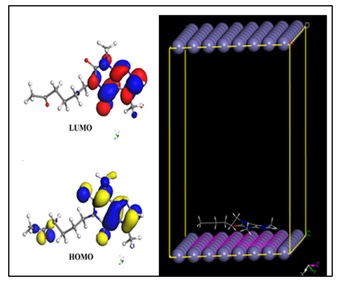
This study aims to evaluate pentoxifylline (PTF), a pharmaceutical drug, as a sustainable green corrosion inhibitor for medium carbon steel in a 0.2 M HCl environment, addressing the critical need for non-toxic industrial alternatives. Experimental investigations were conducted using gravimetric weight loss measurements, hydrogen evolution tests, and electrochemical Tafel polarization across a temperature range of 293.15 to 313.15 K. Theoretical analyses, including Density Functional Theory (DFT) and Monte Carlo simulations, were further employed to explore molecular reactivity and adsorption behavior on the Fe (110) surface. The results revealed that inhibition efficiency increases with PTF concentration, reaching a maximum of 90.0 % at 500 ppm and 293.15 K. Thermodynamic parameters indicated that the process follows the Langmuir isotherm through a spontaneous physical adsorption mechanism. Electrochemical data confirmed that PTF acts as a mixed-type inhibitor, effectively suppressing both anodic metal dissolution and cathodic hydrogen evolution. Furthermore, the addition of iodide ions demonstrated a significant synergistic effect, enhancing the protective capacity to 99.4 %. In conclusion, PTF serves as a highly effective eco-friendly alternative for steel protection. Future research is recommended to investigate the long-term stability of PTF under dynamic industrial flow conditions.
References
Al-Abbasi, A. & Sida, H. (2024). Colorimetric evaluation of the corrosion rate of steel in acidic media in the presence of pentoxifylline drug and KI. Int. J. Corros. Scale Inhib., 13(2), 995-1011. https://doi.org/10.17675/2305-6894-2024-13-2-19
Ekeocha, C., Ikenna, O., Etim, I. -I., & Oguzie, E. (2023). Review of forms of corrosion and mitigation techniques: A visual guide. African Scientific Reports, 117. https://doi.org/10.46481/asr.2023.2.3.117
Al-abbasi, A., Zirik, R., Ahwidi, H., & Massoud, F. (2025). Corrosion Mitigation of Medium Carbon Steel in HCl Solution Using Ficus Carica Leaf Extract: Mass Loss Technique. Journal of Pure & Applied Sciences 24(3), 105-109. https://doi.org/10.51984/jopas.v24i3.4199
Kumar, N., Anunay, P., Kumar, S., Meena, L. K., & Singh, D. (2026). An overview on emerging green organic corrosion inhibitors: sustainable solution for oil and gas industrial applications. RSC Advances, 16(5), 3909-3948. https://doi.org/10.1039/D5RA08166A
Abbas, A., Adesina, A. Y., & Suleiman, R. K. (2023). Influence of Organic Acids and Related Organic Compounds on Corrosion Behavior of Stainless Steel—A Critical Review. Metals, 13(8), 1479. https://doi.org/10.3390/met13081479
Dalmora, G. P. V., Borges Filho, E. P., Maraschin Conterato, A. A., Roso, W. S., Pereira, C. E., & Dettmer, A. (2025). Methods of corrosion prevention for steel in marine environments: A review. Results in Surfaces and Interfaces, 18, 100430. https://doi.org/https://doi.org/10.1016/j.rsurfi.2025.100430
Khaled, K. F. & Hackerman, N. (2003). Investigation of the inhibitive effect of ortho-substituted anilines on corrosion of iron in 1 M HCl solutions. Electrochimica Acta, 48(19), 2715-2723. https://doi.org/http://dx.doi.org/10.1016/S0013-4686(03)00318-9
Bahrami, M. J., Hosseini, S. M. A., & Pilvar, P. (2010). Experimental and theoretical investigation of organic compounds as inhibitors for mild steel corrosion in sulfuric acid medium. Corros Sci, 52. https://doi.org/10.1016/j.corsci.2010.04.024
Goulart, C. M., Esteves-Souza, A., Martinez-Huitle, C. A., Rodrigues, C. J. F., Maciel, M. A. M., & Echevarria, A. (2012). Experimental and theoretical evaluation of semicarbazones and thiosemicarbazones as organic corrosion inhibitors. Corrosion Science, 67, 281-291. https://doi.org/http://dx.doi.org/10.1016/j.corsci.2012.10.029
Suliman, M. S., & Al-abbasi, A. (2007). The synergistic effect of halide ions and organic nitrogen containing compounds on the inhibition of mild steel corrosion in hydrochloric acid solution. In Proceedings of the 6th Libyan Corrosion Conference (Vol. 6). Tripoli, Libya
Yadav, M., Kumar, S., Sinha, R. R., Bahadur, I., & Ebenso, E. E. (2015). New pyrimidine derivatives as efficient organic inhibitors on mild steel corrosion in acidic medium: Electrochemical, SEM, EDX, AFM and DFT studies. Journal of Molecular Liquids, 211, 135-145. http://dx.doi.org/10.1016/j.molliq.2015.06.063
Al-abbasi, A. A., Mohamed Tahir, M. I., & Kassim, M. B. (2012). N-(Pyrrolidin-1-ylcarbothioyl)benzamide. Acta Crystallographica Section E, 68(1), o201. https://doi.org/doi:10.1107/S1600536811053694
Al-abbasi, A. & Kassim, M. (2011). 1-Ethyl-1-methyl-3-(2-nitrobenzoyl)thiourea. Acta Crystallographica Section E, 67(7), o1840. https://doi.org/doi:10.1107/S1600536811024652
Al-abbasi, A., Tan, S., & Kassim, M. (2010). 1-Benzoyl-3-(4-hydroxyphenyl)thiourea. Acta Crystallographica Section E, 66(12), o3181. https://doi.org/doi:10.1107/S1600536810045988
Belkher, N. A., Al-abbas, A.A., & Zidan, M. (2019). Potentiometric Studies on Stability Constant of the Complexes of SomeEssential Transition Metal Ions with L-Valine. Journal of Pure & Applied Science 13(3), 59-63. https://doi.org/10.51984/jopas.v18i3.240
Al-abbasi, A., and Shana, I. (2021). Corrosion Inhibition of Mild Steel in Acidic Media by Expired Carbimazole Drug. Journal of Pure & Applied Sciences, 20(2), 176–180. https://doi.org/10.51984/jopas.v20i2.1646
AL-abbassi, A., Taher, G., Matrood, E., Dnkm, A., Sallh, A., Izrik, R., & Suliman, M. (2020). Study of the Behavior of Sodium Diclofenac Expired Drug as an Corrosion Inhibitor of Iron in Sulfuric Acid Using UV-VIS Spectrophotometry. International Journal of Scientific Research in Science, Engineering and Technology, 233–242. Internet Archive. https://doi.org/10.32628/ijsrset207248
Khalifa, S., AL-abbassi, A., Suliman, M. (2018). Adsorption and Corrosion Inhibition of Mild Steel in Acidic Media by Expired Pharmaceutical Drug. Journal of Pure & Applied Sciences, 17, 1-6. https://doi.org/10.51984/jopas.v17i4.414
Al-abbasi, A., Alqasim, Z. A., Rahuma, F., & Mona, H. (2024). Corrosion Inhibition of Reinforced Steel in 3.5 % Sodium Chloride using Expired Pentoxifylline Drug: A Mass Loss Study. International Science and Technology Journal, 2, 1-21. https://doi.org/www.doi.org/10.62341/ISTJ
Gece, G. k. (2011). Drugs: A review of promising novel corrosion inhibitors. Corrosion Science, 53(12), 3873-3898. https://doi.org/http://dx.doi.org/10.1016/j.corsci.2011.08.006
Njoku, C. N., Maduoma, T. U., Emori, W., Odey, R. E., Unimke, B. M., Yakubu, E., Anorondu, C. C., Udunwa, D. I., Njoku, O. C., & Oyoh, K. B. (2023). Natural and synthetic drugs as eco-friendly and sustainable corrosion inhibitors for metals: a review. Pigment &Amp; Resin Technology, 53(6), 1074–1087. https://doi.org/10.1108/prt-07-2023-0063
AL-Abbasi, A. (2006). Study of corrosion inhibition kinetics of steel by using some organic compounds [Master's thesis, Sebha University. Sebha University Repository.
Al-abbasi, A. S. M., & Milad, A. (2017). The synergistic effects of iodide ions on the corrosion inhibition of mild steel in H2SO4 using phenyl benzoylthiourea. In Proceedings of the 1st International Conference on Science and Technology. Sebha, Libya
Hazazi, O. A., & Abdallah, M. (2013). Prazole Compounds as Inhibitors for Corrosion of Aluminum in Hydrochloric acid. International Journal of Electrochemical Science, 8(6), 8138–8152. https://doi.org/10.1016/s1452-3981(23)12874-4
Elsaeed, S. M., El Tamany, E. S. H., Ashour, H., Zaki, E. G., Khamis, E. A., & El Nagy, H. A. (2018). Corrosion and hydrogen evolution rate control for X-65 carbon steel based on chitosan polymeric ionic liquids: experimental and quantum chemical studies. RSC Advances, 8(66), 37891-37904. https://doi.org/10.1039/C8RA05444D
Becke, A. D. (1988). Density-functional exchange-energy approximation with correct asymptotic behavior. Physical Review A, 38(6), 3098–3100. https://doi.org/10.1103/physreva.38.3098
Lee, C., Yang, W., & Parr, R. G. (1988). Development of the Colle-Salvetti correlation-energy formula into a functional of the electron density. Physical Review B, 37(2), 785. https://doi.org/10.1103/physrevb.37.785
Kara, Y. S., Sagdinc, S. G., & Esme, A. (2012). Theoretical study on the relationship between the molecular structure and corrosion inhibition efficiency of long alkyl side chain acetamide and isoxazolidine derivatives. Protection of Metals and Physical Chemistry of Surfaces, 48(6), 710-721. https://doi.org/10.1134/s2070205112060056
Sastri, V. S. & Perumareddi, J. R. (1994). Selection of Corrosion Inhibitors for Use in Sour Media. CORROSION, 50(6), 432-437. https://doi.org/doi:10.5006/1.3293521
Pearson, R. G. (1988). Absolute electronegativity and hardness: application to inorganic chemistry. Inorganic Chemistry, 27(4), 734-740. https://doi.org/10.1021/ic00277a030
Martinez, S. (2003). Inhibitory mechanism of mimosa tannin using molecular modeling and substitutional adsorption isotherms. Materials Chemistry and Physics, 77(1), 97-102. http://dx.doi.org/10.1016/S0254-0584(01)00569-7
Khalil, N. (2003). Quantum chemical approach of corrosion inhibition. Electrochim Acta, 48. https://doi.org/10.1016/s0013-4686(03)00307-4
Gece, G. (2008). The use of quantum chemical methods in corrosion inhibitor studies. Corros Sci, 50. https://doi.org/10.1016/j.corsci.2008.08.043
Parr, R. G., Szentpály, L. V., & Liu, S. (1999). Electrophilicity index. Journal of the American Chemical Society, 121(9), 1922-1924.
Khaled, K. F. & El-Maghraby, A. (2010). Experimental, Monte Carlo and molecular dynamics simulations to investigate corrosion inhibition of mild steel in hydrochloric acid solutions. Arabian Journal of Chemistry, 7(3), 319-326. http://dx.doi.org/10.1016/j.arabjc.2010.11.005
Musa, A. Y., Jalgham, R. T. T., & Mohamad, A. B. (2011). Molecular dynamic and quantum chemical calculations for phthalazine derivatives as corrosion inhibitors of mild steel in 1 M HCl. Corrosion Science, 56, 176-183. http://dx.doi.org/10.1016/j.corsci.2011.12.005
Akinbulumo, O. A., Odejobi, O. J., & Odekanle, E. L. (2020). Thermodynamics and adsorption study of the corrosion inhibition of mild steel by Euphorbia heterophylla L. extract in 1.5 M HCl. Results in Materials, 5, 100074. https://doi.org/10.1016/j.rinma.2020.100074
Popović, A. S., Aligayev, A., Trajković, D. V., Jovanović, G., Rakočević, L., & Grgur, B. N. (2026). Coupled experimental and theoretical investigation of an antidiabetic drug as a green corrosion inhibitor for low-carbon steel in acidic media. Journal of Electroanalytical Chemistry, 1011, 120076. https://doi.org/10.1016/j.jelechem.2026.120076
Abdul Rahiman, A. F. S. & Sethumanickam, S. (2017). Corrosion inhibition, adsorption and thermodynamic properties of poly(vinyl alcohol-cysteine) in molar HCl. Arabian Journal of Chemistry, 10, S3358-S3366. https://doi.org/10.1016/j.arabjc.2014.01.016
Mahmood, A. et al. (2025). Corrosion inhibition of steel in acidic solution using p-bromopiperazinylbenzene: Experimental and DFT calculations. International Journal of Corrosion and Scale Inhibition, 14, 706-729. https://doi.org/10.17675/2305-6894-2025-14-2-15
Kumar Shukla S., Tanwer, S. (2021). Evaluation of Corrosion inhibition properties of pharmaceutically active compound Cefotaxime sodium on mild steel surface in sulfuric acid medium. Journal of the Turkish Chemical Society Section A: Chemistry, 8(4), 1099–1110. https://doi.org/10.18596/jotcsa.972325
Umoren, S. A., Solomon, M. M., Udosoro, I. I., & Udoh, A. P. (2010). Synergistic and antagonistic effects between halide ions and carboxymethyl cellulose for the corrosion inhibition of mild steel in sulphuric acid solution. Cellulose, 17(3), 635-648. https://doi.org/10.1007/s10570-010-9409-7
Schorr, M., & Yahalom, J. (1972). The significance of the energy of activation for the dissolution reaction of metal in acids. Corrosion Science, 12(11), 867–868. https://doi.org/10.1016/s0010-938x(72)80015-5
Ebenso, E. E., & Obot, I. B. (2010). Inhibitive Properties, Thermodynamic Characterization and Quantum Chemical Studies of Secnidazole on Mild Steel Corrosion in Acidic Medium. International Journal of Electrochemical Science, 5(12), 2012–2035. https://doi.org/10.1016/s1452-3981(23)15402-2
Ebenso, E. E. (2003). Synergistic effect of halide ions on the corrosion inhibition of aluminium in H2SO4 using 2-acetylphenothiazine. Materials Chemistry and Physics, 79(1), 58-70. https://doi.org/10.1016/S0254-0584(02)00446-7
Deyab, M. A., & El-Rehim, S. S. A. (2014). Effect of succinic acid on carbon steel corrosion in produced water of crude oil. Journal of the Taiwan Institute of Chemical Engineers, 45(3), 1065–1072. https://doi.org/10.1016/j.jtice.2013.09.004
Deyab, M. A. (2015). Egyptian licorice extract as a green corrosion inhibitor for copper in hydrochloric acid solution. Journal of Industrial and Engineering Chemistry, 22, 384–389. https://doi.org/10.1016/j.jiec.2014.07.036
Obot, B., Obi-Egbedi, N. O., & Umoren, S. A. (2009). Experimental and theoretical investigation of clotrimazole as corrosion inhibitor for aluminium in hydrochloric acid and effect of iodide ion addition. Der Pharma Chemica, 1(1), 151-166.
Hashim, N. M., Rahim, A. A., Osman, H., & Raja, P. B. (2012). Quinazolinone compounds as corrosion inhibitors for mild steel in sulfuric acid medium. Chemical Engineering Communications, 199(6), 751–766. https://doi.org/10.1080/00986445.2011.617801
Abdel Hameed, R., Essa, A., Mohamed, D., Abdallah, M., Aljohani, M., Al-Mhyawi, S., Soluman, M., & Arafa, E. (2021). Evaluation of Expired Augmentine Drugs as Corrosion Inhiitor for Carbon Steel Alloy in 1.0 n hcl Acidic Environment Using Analytical Techniques. Egyptian Journal of Chemistry, 65(4), 735-745. https://doi.org/10.21608/ejchem.2021.95853.4495
Feng, L., Zhang, S., Zhou, Y., Pan, R., Du, H., Liu, F., & Yang, Y. (2023). Expired Glucosamine Drugs as Green Corrosion Inhibitors for Carbon Steel in H2SO4 Solution and Synergistic Effect of Glucosamine Molecules with Iodide Ions: Combined Experimental and Theoretical Investigations. Crystals, 13(2), 205. https://doi.org/10.3390/cryst13020205
Kur’yato, L. E. T. a. V. A. (2025). Anticorrosive, antihydrogenating and bactericidal effects of a number of expired drugs. International Journal of Corrosion and Scale Inhibition, 14(4). https://doi.org/10.17675/2305-6894-2025-14-4-6
Wang, X., Yang, H., & Wang, F. (2011). An investigation of benzimidazole derivative as corrosion inhibitor for mild steel in different concentration HCl solutions. Corrosion Science, 53(1), 113-121. https://doi.org/10.1016/j.corsci.2010.09.029
Zhang, H. -h., Gao, K., Yan, L., & Pang, X. (2017). Inhibition of the corrosion of X70 and Q235 steel in CO2-saturated brine by imidazoline-based inhibitor. Journal of Electroanalytical Chemistry, 791, 83-94. https://doi.org/10.1016/j.jelechem.2017.02.046
Zheng, T., Liu, J., Wang, M., Liu, Q., Wang, J., Chong, Y., & Jia, G. (2022). Synergistic corrosion inhibition effects of quaternary ammonium salt cationic surfactants and thiourea on Q235 steel in sulfuric acid: Experimental and theoretical research. Corrosion Science, 199, 110199. https://doi.org/10.1016/j.corsci.2022.110199
Ali, S. M. & Al Lehaibi, H. A. (2016). Control of zinc corrosion in acidic media: Green fenugreek inhibitor. Transactions of Nonferrous Metals Society of China, 26(11), 3034-3045. https://doi.org/10.1016/S1003-6326(16)64434-5
Mohamed, K. E. M., Ibrahim, O. H., El-Bedawy, M. E., & Ali, A. H. (2020). Synergistic effect of different Zn salts with sodium octanoate on the corrosion inhibition of carbon steel in cooling water. Journal of Radiation Research and Applied Sciences, 13(1), 276-287. https://doi.org/10.1080/16878507.2020.1730603
Khadom, A. A., Abd, A. N., & Ahmed, N. A. (2022). Synergistic effect of iodide ions on the corrosion inhibition of mild steel in 1 M HCl by Cardaria Draba leaf extract. Results in Chemistry, 4, 100668. https://doi.org/10.1016/j.rechem.2022.100668
Tang, M., Li, X., Deng, S., & Lei, R. (2021). Synergistic inhibition effect of Mikania micrantha extract with KI on steel corrosion in H2SO4 solution. Journal of Molecular Liquids, 344, 117926. https://doi.org/10.1016/j.molliq.2021.117926
Oza, B. N., Sinha, R.S. (1982). Thermometric study of corrosion behaviour of high strength Al–Mg alloy in phosphoric acid in presence of halides. Trans SAEST, 17(1), 281–285.
El‐Awady, A. A., Abd‐El‐Nabey, B. A., & Aziz, S. G. (1992). Kinetic‐Thermodynamic and Adsorption Isotherms Analyses for the Inhibition of the Acid Corrosion of Steel by Cyclic and Open‐Chain Amines. Journal of the Electrochemical Society, 139(8), 2149–2154. https://doi.org/10.1149/1.2221193
Ituen, E., Akaranta, O., & James, A. (2017). Evaluation of Performance of Corrosion Inhibitors Using Adsorption Isotherm Models: An Overview. Chemical Science International Journal, 18, 1-34. https://doi.org/10.9734/CSJI/2017/28976
Madkour, L. H. & Elshamy, I. H. (2016). Experimental and computational studies on the inhibition performances of benzimidazole and its derivatives for the corrosion of copper in nitric acid. International Journal of Industrial Chemistry, 7(2), 195-221. https://doi.org/10.1007/s40090-015-0070-8
Yang, W. & Parr, R. G. (1985). Hardness, softness, and the fukui function in the electronic theory of metals and catalysis. Proc Natl Acad Sci U S A, 82(20), 6723-6. https://doi.org/10.1073/pnas.82.20.6723
Chattaraj, P. K., Sarkar, U., & Roy, D. R. (2006). Electrophilicity Index. Chemical Reviews, 106(6), 2065-2091. https://doi.org/10.1021/cr040109f
Zarrouk, A., Hammouti, B., Dafali, A., Bouachrine, M., Zarrok, H., Boukhris, S., & Al-Deyab, S. S. (2014). A theoretical study on the inhibition efficiencies of some quinoxalines as corrosion inhibitors of copper in nitric acid. Journal of Saudi Chemical Society, 18(5), 450–455. https://doi.org/10.1016/j.jscs.2011.09.011
Martinez, S., & Štagljar, I. (2003). Correlation between the molecular structure and the corrosion inhibition efficiency of chestnut tannin in acidic solutions. Journal of Molecular Structure: THEOCHEM, 640(1-3), 167–174. http://dx.doi.org/10.1016/j.theochem.2003.08.126
Lukovits, I., Kálmán, E., & Pálinkás, G. (1995). Nonlinear Group-Contribution Models of Corrosion Inhibition. Corrosion, 51(3), 201–205. https://doi.org/10.5006/1.3294362
Khaled, K. F. (2009). Experimental and atomistic simulation studies of corrosion inhibition of copper by a new benzotriazole derivative in acid medium. Electrochimica Acta, 54(18), 4345-4352. http://dx.doi.org/10.1016/j.electacta.2009.03.002
Kaya, S. & Kaya, C. (2015). A new method for calculation of molecular hardness: A theoretical study. Computational and Theoretical Chemistry, 1060, 66-70. https://doi.org/10.1016/j.comptc.2015.03.004
Ebenso, E. E., Isabirye, D. A., & Eddy, N. O. (2010). Adsorption and quantum chemical studies on the inhibition potentials of some thiosemicarbazides for the corrosion of mild steel in acidic medium. Int J Mol Sci, 11. https://doi.org/10.3390/ijms11062473
Zeng, J., Zhang, J., & Gong, X. Molecular dynamics simulation of interaction between benzotriazoles and cuprous oxide crystal. Computational and Theoretical Chemistry, 963(1), 110-114. http://dx.doi.org/10.1016/j.comptc.2010.10.006
Znini, M., Majidi, L., Bouyanzer, A., Paolini, J., Desjobert, J.M., & Costa, J., Hammouti, B. (2012). Essential oil of Salvia aucheri mesatlantica as a green inhibitor for the corrosion of steel in 0.5 M H2SO4. Arabian Journal of Chemistry, 5(4), 467-474. https://doi.org/10.1016/j.arabjc.2010.09.017
Downloads
Published
How to Cite
Issue
Section
License
Copyright (c) 2026 Aisha Al-Abbasi, Hussan Sida, Hamdy Matter, Fatima Massoud

This work is licensed under a Creative Commons Attribution-NonCommercial-NoDerivatives 4.0 International License.

This work is licensed under a Creative Commons Attribution-NonCommercial-NoDerivatives 4.0 International License.
Authors retain copyright and grant the journal right of first publication with the work simultaneously licensed under a Creative Commons Attribution License (CC BY-NC-ND 4.0) that allows others to share the work with an acknowledgement of the work's authorship and initial publication in this journal.
